 Skip to content

Accredited Level 3 Certificate in Dementia Care
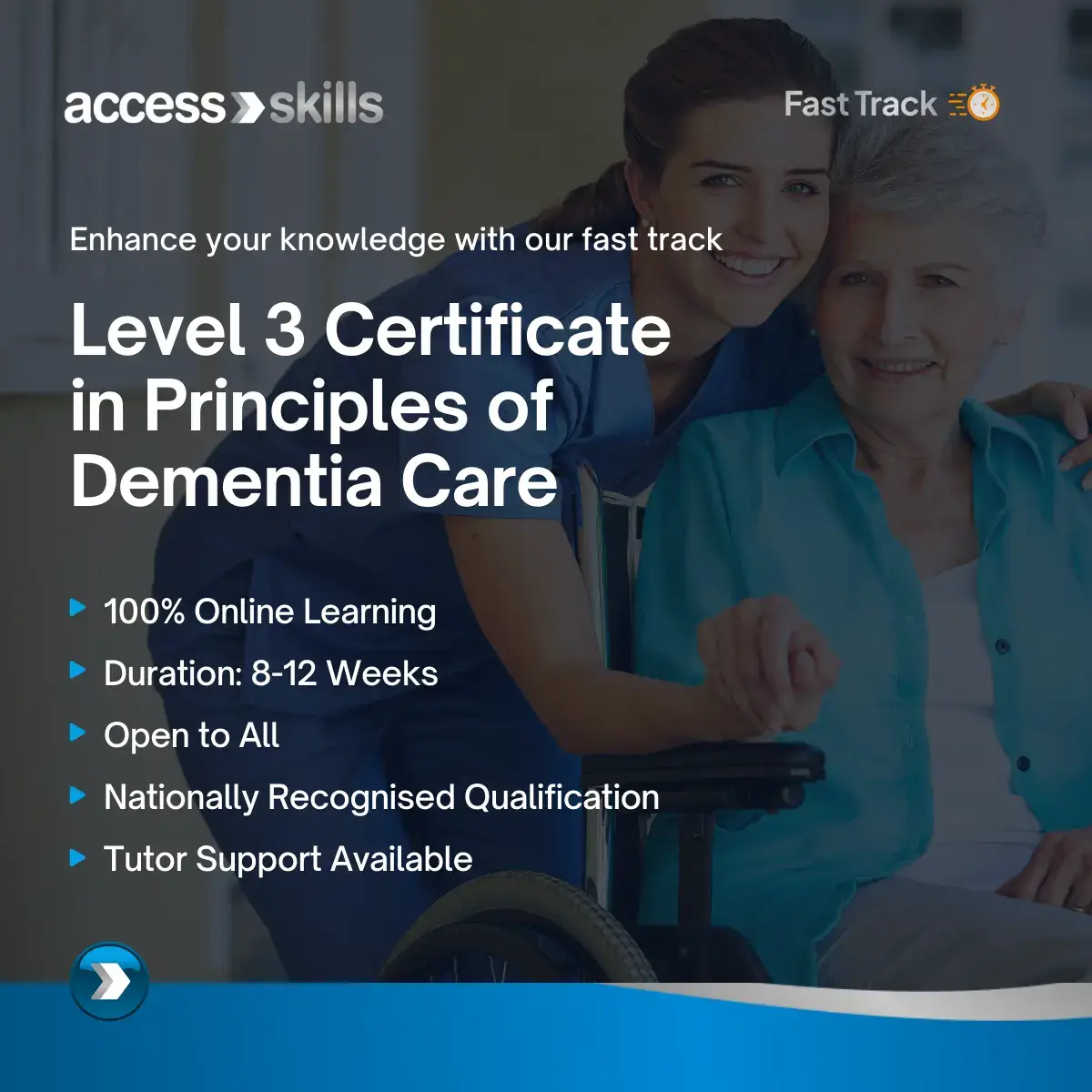
Our Accredited Level 3 Cerificate in Dementia Care are designed to enhance your knowledge and understanding in specialised areas of care.
Requirments, Study Method & Duration
Entry Requirments
Open to all, Age 16+
Start Date:
Enrolment anytime
Duration
8-12 Weeks
Learning Method
100% Online, Online Assessment
Fees and Funding
Easy Instalment Plans & Funding Available
Dementia Care Course Overview
The Level 3 Certificate in Dementia Care has been designed to give learners a deeper understanding of dementia, its causes, how it affects people, and the best approaches to supporting individuals living with the condition. It is an ideal qualification for anyone working or aspiring to work in the health and social care setting.
In the UK, over 900,000 people are currently living with dementia, and the number is expected to rise to 1.4 million by 2040.Although dementia cannot be cured, the right knowledge, compassionate support, and person-centred care can significantly improve quality of life for those affected.
As a care worker or an individual passionate about helping people living with dementia, this course sets you up for this.
The qualification also serves as a strong foundation for progressing into more specialised roles in dementia support or advancing to higher-level health and social care training. With a nationally recognised certificate, flexible learning and expert tutor support, you will learn to provide person-centered care to both service user and colleagues.
DEMENTIA CARE Course Content
The Level 3 Certificate in Dementia Care qualification, delivered through its seven mandatory units, provides a comprehensive understanding of how dementia affects individuals and their families, alongside best-practice approaches for delivering safe, person-centred, and compassionate support.
Throughout the course, learners will develop a deeper understanding of the causes, types, and progression of dementia, as well as how to effectively support communication, memory, and orientation. The course also explores how to promote wellbeing, engagement, and meaningful activity, while ensuring equality, diversity, inclusion, and the rights of individuals are always respected.
In addition, learners will gain knowledge on maintaining dignity, supporting autonomy, and enabling person-centred decision-making, alongside understanding their professional responsibilities in areas such as safeguarding, teamwork, and safe practice.
Below is a breakdown of the core units included.
In this unit, you will explore the different types of dementia, how symptoms develop over time, and the impact dementia can have on cognition, communication, emotions, and daily living.
You’ll also examine risk factors, how dementia is understood within health and social care, and the importance of early, supportive interventions.
This unit focuses on how to tailor care to each individual’s preferences, history, routines, and lived experiences. You’ll learn:
- How person-centred care promotes dignity, independence, wellbeing, and trust
- How this approach forms the foundation of all dementia support.
Dementia can affect speech, memory, processing, and interpretation of information.
In this unit, you will explore effective communication techniques, including:
- Using calm, clear verbal communication
- Supporting non-verbal communication
- Reducing confusion and enhancing understanding
- Adapting interaction styles to changing needs
You’ll learn how to create supportive environments where individuals feel heard, respected, and understood.
This unit provides a clear, accessible overview of a range of mental health conditions, focusing on how they may present and how individuals may experience them.
You’ll learn:
- How different conditions may influence thoughts, emotions, and behaviours
- How mental ill health can impact daily living and decision-making
- The importance of respectful, person-centred responses that preserve dignity
The unit also covers contributory factors, the importance of avoiding assumptions, and how to support individuals in a safe, compassionate way.
In this unit, you will learn how equality, diversity, and inclusion must be embedded into dementia care. Topics include:
- Understanding how background, culture, beliefs, and identity shape lived experience
- Challenging stigma and discrimination
- Ensuring fair access to support
- Respecting individual rights and preferences
This unit helps ensure care remains respectful, inclusive, and aligned with legal and ethical frameworks.
This unit explores how to maintain autonomy and uphold the rights of individuals living with dementia. You will learn how to:
- Support decision-making
- Promote independence wherever possible
- Work within the Mental Capacity Act and best-interest processes
- Encourage involvement in care planning
- Protect dignity, privacy, and consent
The unit reinforces the importance of professional responsibility and ethical practice.
This unit provides a high-level understanding of how medication is used within dementia care settings without giving any clinical instructions or guidance.
You will explore:
- The purpose of commonly used medication types
- The importance of monitoring well being and responding appropriately within your role
- Working safely within organisational procedures
- Supporting individuals in a respectful, person-centred way
- The focus is on well being, safe practice, and understanding your responsibilities — not on administering medication.
Career Progression
The Level 3 Certificate in Understanding Dementia Care is suitable for those entering or working in care, education, or community support roles.
As dementia knowledge becomes increasingly essential across health and social care settings, this qualification provides a strong foundation to deliver high-quality, person-centred support and progress in your career.
- Dementia support roles in residential, nursing, supported living, or domiciliary care
- Senior carer or team leader positions requiring specialist dementia knowledge
- Learning support or SEN roles involving cognitive or communication needs
- Community or outreach roles supporting individuals and families
- Strengthening your CPD portfolio with specialist dementia expertise
- Progression into clinical support, day-centre, reablement, or multidisciplinary team roles
This qualification also prepares you for progression into higher-level study, such as the Level 4 Diploma in Adult Care
DEMENTIA CARE Course - FAQ
The Level 3 Certificate in the Principles of Dementia Care is a nationally recognised qualification designed to develop your understanding of dementia, including its causes, types, progression, and how to provide compassionate, person-centred support. It focuses on real-world care skills such as communication, wellbeing, and supporting independence.
This dementia course is ideal for:
Care assistants and support workers
Senior carers looking to progress
Individuals starting a career in health and social care
Anyone supporting people living with dementia
You don’t need prior experience, but a Level 2 qualification or basic care knowledge can be helpful.
You will gain practical knowledge in:
Types and progression of dementia
Person-centred care approaches
Communication techniques for dementia support
Promoting wellbeing and meaningful activities
Equality, dignity, and rights in care
Safeguarding and professional responsibilities
The course is structured across 7 key units covering all essential areas of dementia care.
Yes, this is a nationally recognised Level 3 qualification in health and social care. It supports career progression and demonstrates your knowledge in delivering high-quality dementia care.
The course is assessed through written assignments rather than exams. You complete coursework for each unit, which is reviewed by your tutor with feedback and support throughout.
Yes, the course is fully online and flexible. You can study at your own pace from home, making it ideal for working professionals or those with busy schedules.
Most learners complete the course within 8–16 weeks, depending on their pace. You can study around your existing commitments.
No, you don’t need previous experience. This course is suitable for beginners as well as those already working in care who want to deepen their knowledge.
The course aligns with key care principles such as:
Person-centred care
Dignity and respect
Safeguarding and safety
Effective communication
These are essential for delivering care that meets CQC expectations for safe, effective, and responsive services.
Training = short courses, basic awareness
Level 3 Qualification = in-depth knowledge, recognised certificate, career progression
This course gives you structured, deeper understanding rather than just surface-level learning.
Enquire Now
Submit your details and our Sales Team will reach out to assist further

