 Skip to content


AI in care isn’t some far-off idea anymore — it’s here, and it’s already changing the way care is delivered and how professionals learn and grow. Think about it, from boosting efficiency to offering more personalised support, AI is quietly becoming a real game-changer in the care sector.
If you’ve ever wished you could spend less time buried in paperwork and more time actually caring for people, you’ll understand why AI feels so exciting. It’s not about replacing the human touch — far from it. Instead, it’s about taking away the repetitive tasks, supporting better decision-making, and even helping learners build their skills with less stress.
Over the next few minutes, I’d love to walk you through eight practical ways AI can make a genuine difference in your day-to-day care work and studies. Some of these might feel familiar, others might surprise you — but all of them are designed to give you back more time and energy for what truly matters.
1. Automate Routine Tasks with AI in Care for Greater Efficiency
Let’s be honest—paperwork and admin can feel never-ending in care. From scheduling appointments to updating records, the little tasks pile up until suddenly hours of your day are gone. And the frustrating part? That’s precious time you could have spent with the people who need you most.
This is where AI really shines. Imagine having a digital helping hand that takes care of those repetitive jobs for you—booking systems, updating records, or even sending reminders—all done accurately and without the headache. That’s exactly what AI can do, and it means fewer errors, less stress, and more focus on direct care.
I remember times when stacks of forms sat waiting while residents looked forward to just a few minutes of conversation. That trade-off never felt right. With AI streamlining those admin tasks, carers can reclaim that time for human connection—the heart of what care is all about.
In fact, studies show AI automation can cut administrative work by up to 30%. Imagine what that extra time could mean in your workplace, more smiles, more presence, and less time chasing paperwork.
 Try this: Look into simple AI-powered scheduling tools (like Calendly or similar apps). They can take a surprising weight off your shoulders and give you back more time where it really counts.
2. Enhance Diagnosis with AI in Care for Better Outcomes
One of the most exciting things about AI in care is its ability to notice the little details that we, as humans, might easily miss. While we bring compassion and experience, AI brings sheer data power — it can sift through huge amounts of information in seconds, spotting subtle patterns that could point to early signs of conditions like dementia or heart disease.
Think about it, instead of waiting until symptoms become obvious, AI can help flag potential issues sooner. That means earlier support, tailored treatment plans, and far fewer rounds of frustrating “trial and error.”
Picture this in a care home, a resident’s health records are quietly analysed by an AI tool, which then highlights patterns linked to early dementia. That early heads-up could mean timely interventions, extra support, and, most importantly, a better quality of life for that resident.
Of course, they should never replace professional judgement but rather serve as a powerful partner. That’s why training is key. Access Skills qualifications equip carers with the knowledge and confidence to work alongside new technologies while still delivering person-centred care.
👉 Try this- If you’re in a workplace where clinical decisions play a role, start conversations about AI-powered diagnostic tools. They’re not here to replace your expertise — they’re here to support it and help you deliver even better outcomes.
3. Transform Remote Monitoring with AI in Care
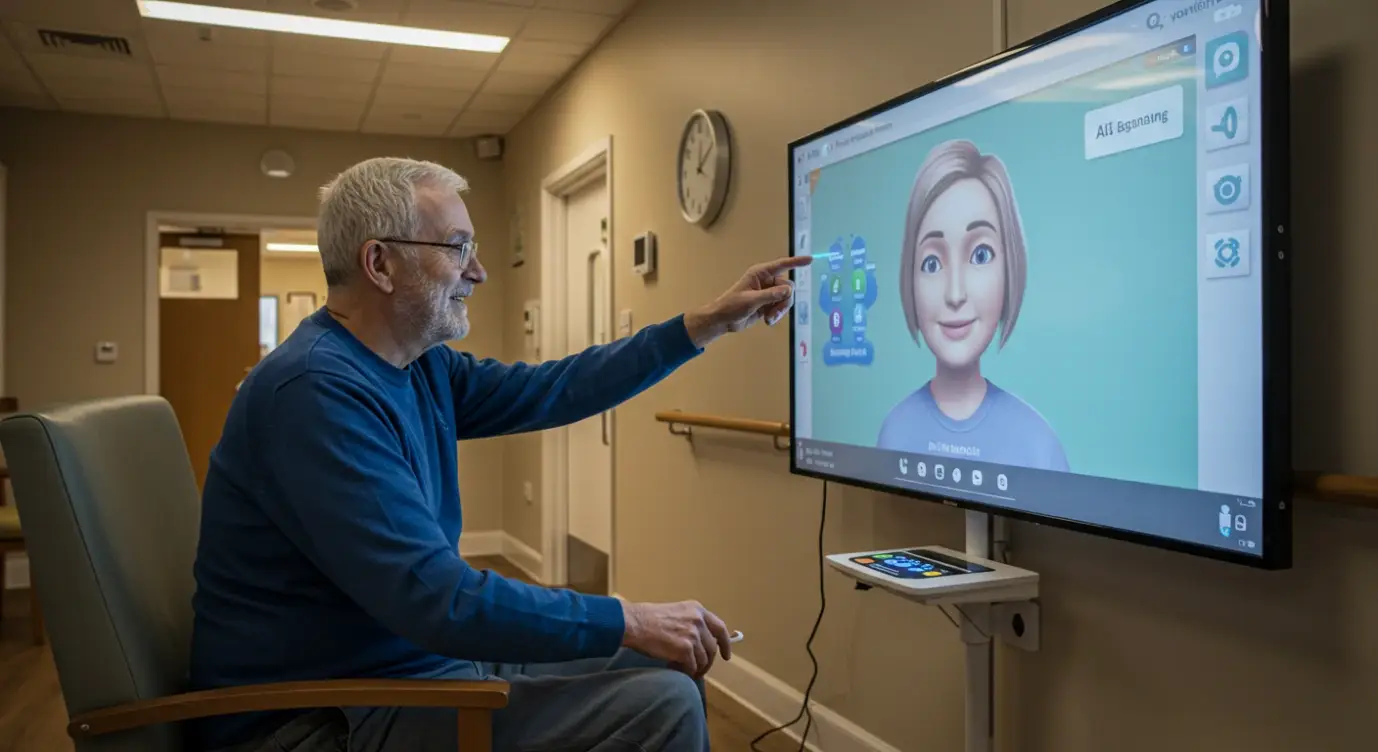
Imagine being able to support someone’s health without always needing to be right by their side. That’s the promise of AI-powered remote monitoring. Through wearable devices and smart sensors — think smartwatches, motion detectors, or even discreet health trackers — carers can keep an eye on vital signs like heart rate, sleep patterns, or unusual inactivity.
For older adults or those living with long-term conditions, this can be life-changing. Quick alerts allow carers to step in when something seems off, giving people the confidence to live more independently while offering families priceless peace of mind.
I’ve seen how reassuring it is for relatives to know that if a loved one’s heart rate spikes or they don’t move around as usual, an alert will make sure help isn’t far away.
The NHS has already begun exploring these possibilities. From using AI in imaging to digital triage tools like NHS 111 online, guidance is being developed to ensure new technology supports, rather than replaces, professional care. Remote monitoring fits into this bigger picture, it can strengthen safety, independence, and proactive care when used responsibly.
👉 Explore wearable health tech such as Fitbits, Apple Watches, or smart home sensors. Even simple tools can make real-time monitoring a practical reality in care settings.
4. Leverage Predictive Analytics for Proactive Care Planning
Let’s face it, predicting what might happen next can be the difference between reactive firefighting and truly proactive care. That’s precisely where predictive analytics steps in. By processing a blend of medical history, lifestyle details, and other relevant data, AI can forecast potential health risks—like falls or deterioration—and help you step in early with personalised support plans.
Imagine an AI notices subtle changes in a resident’s movement or behaviour and flags an increased fall risk. That insight could prompt timely adjustments—mobility aids, gentle exercises, or changes to the environment—long before an incident actually occurs.
Studies back this up that healthcare organisations using AI predictive models have reported up to 25% savings in operational costs and 15–20% fewer readmissions—thanks to better planning, fewer unnecessary tests, and shorter hospital stays
In the UK specifically, the NHS is preparing to invest heavily in predictive AI. A new £200 million framework is expected to support predictive tools for demand forecasting and cost management across services by early 2026
Actionable Tip: Why not chat with your team about exploring AI tools that assess data to flag early risks? These tools aren’t about replacing intuition—they’re about enriching it with insight.
5. Personalise Support with AI in Care Chatbots
Sometimes, connection starts with a quiet “hello”—even if that hello comes from a chatbot. AI-powered chatbots and virtual assistants aren’t just about data; they’re about emotional connection.
Whether it’s gentle medication reminders or a simple check-in on mood, these tools can offer support—especially for older adults who may feel lonely—without replacing human empathy.
I’ve seen loneliness quietly weigh on people in care. The idea of an AI chatbot popping up to gently ask, “How are you feeling today?” might feel like a small gesture—but it can mean the world.
And it’s more than just comforting, a study found that AI companions can be just as effective as interactions with real people in reducing loneliness. In fact, one longitudinal study showed that users felt consistently less lonely over the course of just one week with regular chatbot interaction—and part of that came from feeling genuinely heard.
In another example, the ElliQ robot—designed to combat senior isolation—has been shown by its developers to reduce feelings of loneliness for over 90% of its users.
So yes, these AI tools aren’t here to replace your care—but to support it, filling small gaps in a kind, human-centred way.
Actionable Tip; Consider piloting an AI chatbot—perhaps Woebot or another vetted platform—to offer gentle reminders, mood check-ins, or simply a friendly voice for service users.

6. Boost Data Analysis with AI in Care for Evidence-Based Decisions
Data is the lifeblood of thoughtful care—and AI is your toolkit for making sense of it fast and smart. Whether it’s digging through electronic health records or scouring research papers, AI can spot patterns, trends, or treatment signals far quicker and often more accurately than manual review.
Imagine this in practice; an AI system crunches care home data—tracking infection rates, falls, medicine errors—and alerts you before trends become crises. Proactive, data-informed decisions can significantly improve safety and outcomes.
Research supports this promise:
- AI excels in interpreting healthcare data, enhancing clinical decisions and supporting evidence-based care. It can even reduce human error in diagnostics and improve care quality.
- In one review, AI analytics in healthcare demonstrated diagnostic accuracy ranging from 85% to 98%, with sensitivity and specificity frequently hitting the mid-90s. This results in both faster and more precise identification of health issues.
These are the kind of insights that can transform how decisions are made, helping staff target the right actions at the right time.
If you’re a care provider, speak with your care team about exploring AI platforms for data analysis—whether it’s spotting trends in health outcomes or improving workflows. These tools can bolster your decisions with evidence, not just intuition.
7. Overcome Challenges of AI in Care with Ethical Practices
AI can feel like a great leap forward — but like any tool, it comes with important responsibilities. Kelly Dace (Access Skills Tutor) reminded us that potent as AI is, we must stay vigilant. Ethical use means guarding sensitive health data, preventing algorithmic bias, and ensuring we never allow tech to overwhelm the human connection at the heart of care.
I share that concern deeply. There’s something unexpectedly frightening about well-intentioned tech becoming so familiar that we forget empathy comes from humans.
And it’s not just theory. In 2023, the health sector was responsible for over 17 % of data breaches reported to the UK’s Information Commissioner’s Office (ICO)—more than any other sector.
So what should we keep in mind?
- Privacy first: AI systems must be built with robust data protection — encryption, strong access controls, and strict permissions.
- Bias awareness: Models can reflect societal inequalities unless their training data is representative and well-monitored. The ICO encourages steps like data protection impact assessments and regular checks for bias.
- Human oversight: AI outputs should be interpreted alongside professional judgement. The goal is support, not substitution.
- Ongoing training: Staff must understand secure practice, privacy rights, and how to spot bias — not just for users, but for themselves and the people they support.
Make sure your workplace adopts clear data security protocols and trains staff on ethical AI. Consider a Data Protection Impact Assessment (DPIA) before introducing any new AI system.
8. AI in Care Responsibly; Smarter Learning, Ethical Use
AI isn’t only transforming care services—it’s also a powerful support tool for students. It can help with research, grammar checks, and generating ideas for coursework. But ethical use matters.
Instead, AI should be treated like a study partner—drafting ideas that you then rewrite in your own words and enrich with examples from your workplace.
Surveys show that nearly 1 in 3 students admit to using AI tools without proper referencing, underlining the importance of ethical use in education.
Use AI responsibly. Try tools like Grammarly for proofreading or ChatGPT for research, but always paraphrase, reference and add real-world care examples to demonstrate understanding.
The Future of AI in Care
Looking ahead, AI is set to become a cornerstone of healthcare innovation. From smarter diagnostics to cost-effective care delivery, its potential is vast. But here’s the key, success depends on collaboration between care professionals, tech developers, and policymakers, ensuring that AI is introduced ethically and always with people at the centre.
If we embrace it responsibly, AI can help us build a more responsive, person-centred care system—one where technology enhances compassion rather than replacing it.
Your Next Step
If you’re curious about how AI fits into your own journey, explore the resources and qualifications offered by Access Skills.
Together, we can shape a future where technology and compassion go hand in hand.


